Is aqua cycling good for knee arthritis?
Short answer: for many people with mild to moderate knee arthritis, yes, it's a good option. A 2020 study found that 12 weeks of aqua cycling, twice a week, led to less knee pain and easier daily movement.[1] Water takes part of your weight and there's no pounding. It won't reverse arthritis, and you should check with your doctor or physio before you start.
4.9 on Google Maps
What is aqua cycling?
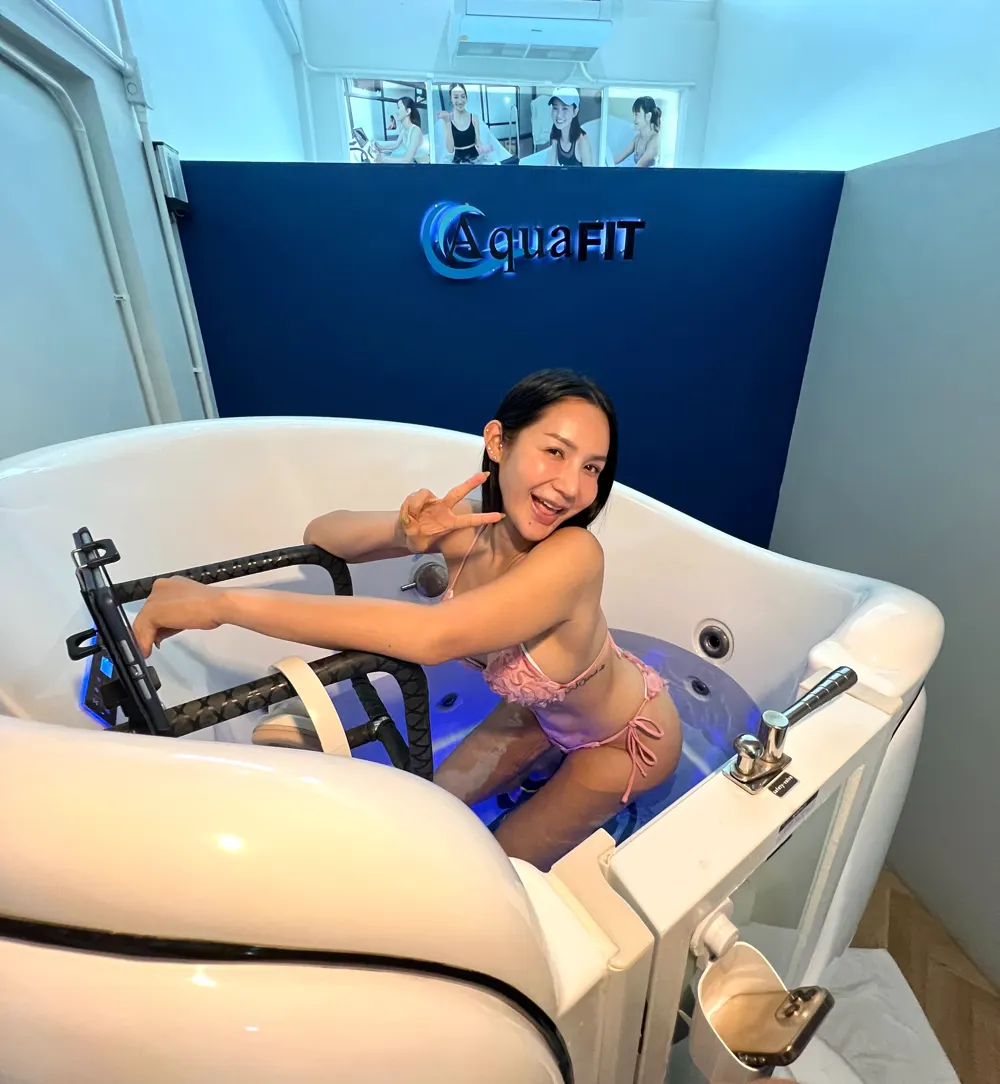
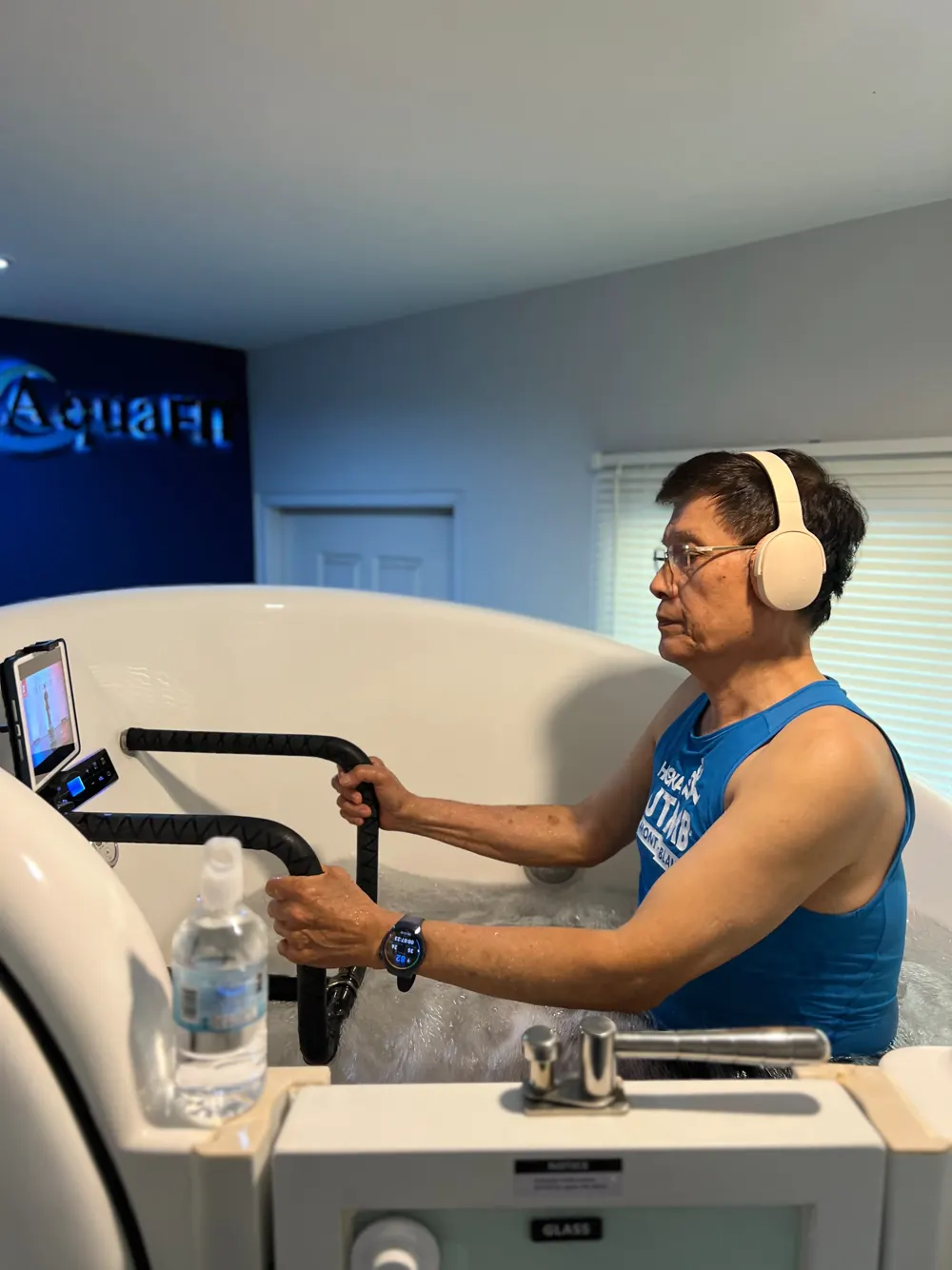
Aqua cycling means pedalling an exercise bike that sits under water, with the water at about waist or chest height. There are two main kinds:
- Pool classes: several bikes in a swimming pool, with an instructor.
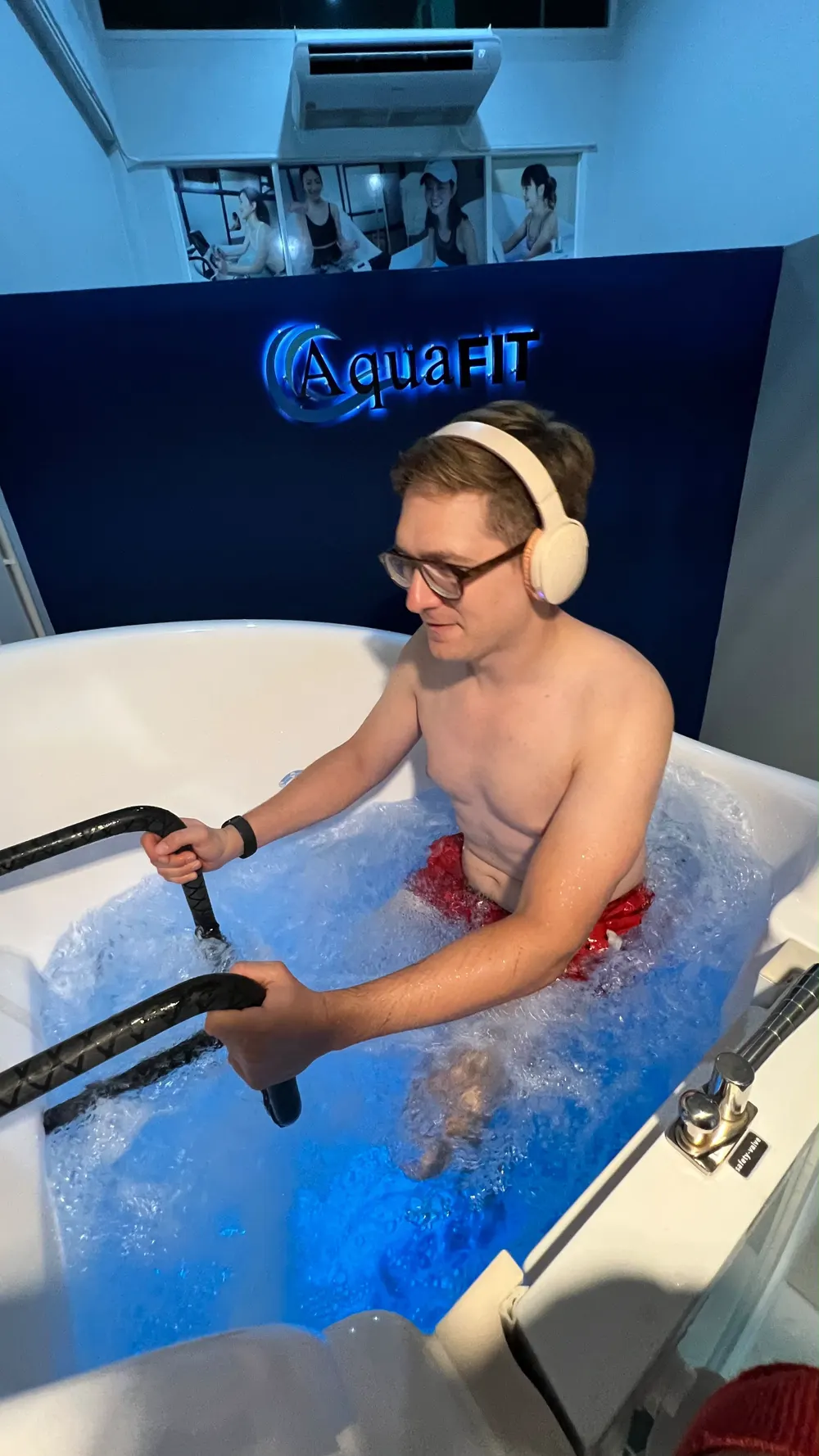
- Private tubs: one bike in its own tub of warm water, often with massage jets. Also called aquabiking in Europe, where it's popular.
Either way, you don't need to swim.
What the research found
The 2020 aqua cycling study
The most relevant study is a 2020 trial from the Netherlands with 111 people aged 50–70.[1] Everyone had mild to moderate arthritis in one knee. About half were picked at random to do aqua cycling in a pool: 45-minute sessions, twice a week, for 12 weeks. The rest carried on with their usual care.
What happened:
- Knee pain: the cycling group's pain score improved by about 7 points on a 100-point scale. The usual-care group stayed about the same. The gap between the groups was about 8 points.
- Daily function (things like stairs, getting up, walking): the cycling group improved by about 8 points. The gap between the groups was about 7 points.
- It lasted: 12 weeks after the programme ended, the cycling group still scored better.
- People stuck with it: on average, they came to 80% of sessions.
In plain words: a real, moderate improvement in daily life. Worthwhile for many people.
The bigger picture: water exercise in general
A Cochrane review from 2016 (Cochrane is a respected group that pools many studies together) looked at 13 trials with 1,190 people with knee or hip arthritis.[2] Water exercise of all kinds gave:
- About 5 points less pain on a 100-point scale
- About 5 points better daily function
- About 7 points better quality of life
- No serious side effects reported
The authors called these improvements small and short term, and rated the evidence as moderate quality.[2] That means future studies could change the picture.

Why water helps sore knees
Buoyancy. Buoyancy is water's upward push. It holds up part of your body weight, so less weight presses down through your knees. The deeper the water, the more it holds.
No impact. Walking and running land on your knees with every step. Pedalling is a smooth circle, and in water there is no landing at all.
Resistance in every direction. Water pushes back on your legs as you pedal. That makes your thigh and hip muscles work, even at a slow pace. Strong thigh muscles help support the knee.
Warmth. Many people with arthritis find warm water eases stiffness and makes it easier to get moving. It's a comfort effect, not a fix.
The limits of the evidence
We'd rather be honest than oversell:
Small studies
One good trial on aqua cycling is encouraging, but it's still one trial.[1]
Mild to moderate arthritis
People with severe arthritis or a knee replacement weren't in the main study.[1]
Pools, not private tubs
The study used bikes in a pool.[1] No trial has tested private warm-water tubs with massage jets.
It doesn't change the joint
Exercise can ease pain and help you move better. It doesn't regrow cartilage or reverse arthritis.
Results vary
Averages hide a range. Some people improve a lot, some a little.
What to ask your doctor or physio first
The UK's NHS advises talking to your GP or physio before starting a new exercise plan for osteoarthritis.[3] Good questions to ask:
- Is my arthritis mild, moderate or severe?
- Is cycling OK for my knee? Any movements to avoid?
- How hard should I push, and how will I know it's too much?
- Is warm water OK with my heart, blood pressure and medicines?
- I've had surgery or an injection – how long should I wait?
- What pain should make me stop and call you?
Check with your doctor first if…
How to start
How often. The 2020 study used two sessions a week.[1] That's a sensible start. The US CDC suggests adults with arthritis build up to about 150 minutes of moderate activity a week, plus muscle-strengthening on two days.[4] You don't need all of that on day one. The CDC says you can start with just 5 minutes, and short sessions add up.[4]
How hard. Start easy. A good guide is the “talk test”: you should be able to talk in short sentences while you pedal. If you can't, slow down.
Seat height. Set it so your knee stays slightly bent at the bottom of each pedal stroke. A seat that's too low forces a deep knee bend, which many sore knees dislike.
Build up slowly. Change one thing at a time: a little longer, or a little harder, not both. Only step up when the last session felt fine the next day.
Keep your physio exercises. If you were given strength or balance moves for land, keep doing them too.
Normal soreness vs warning signs
How it compares with other options
| Option | Good | Downside |
|---|---|---|
| Land exercise bike | Also low-impact and cheap | No water support, and a seat that's too low can bother sore knees |
| Swimming | Great for fitness | You need to swim, and breaststroke kick can strain some knees |
| Walking in water | Gentle and easy to start | Harder to raise the effort |
| Aqua cycling | Water support plus steady leg work | You need access to a pool class or private tub |
The best exercise is the one you'll keep doing. If weight is part of the picture, see how to lose weight with bad knees.
What riders say
“Exercising by cycling in the water was amazing! I loved it. It reduces the impact, which is important for me as I'm getting older and I frequently sprain my ankle.”
“I was very impressed with the service from all the staff. Cycling in the water was so much fun! It was tiring, but it didn't affect my knees at all. The place was clean, the service was good and friendly. I highly recommend it!”
“The program is really fun and effective. The place is clean and convenient. The staff is very kind and helpful. If you looking for the exercise program that safe and fun, I recommend this place.”
Trying aqua cycling in Chiang Mai
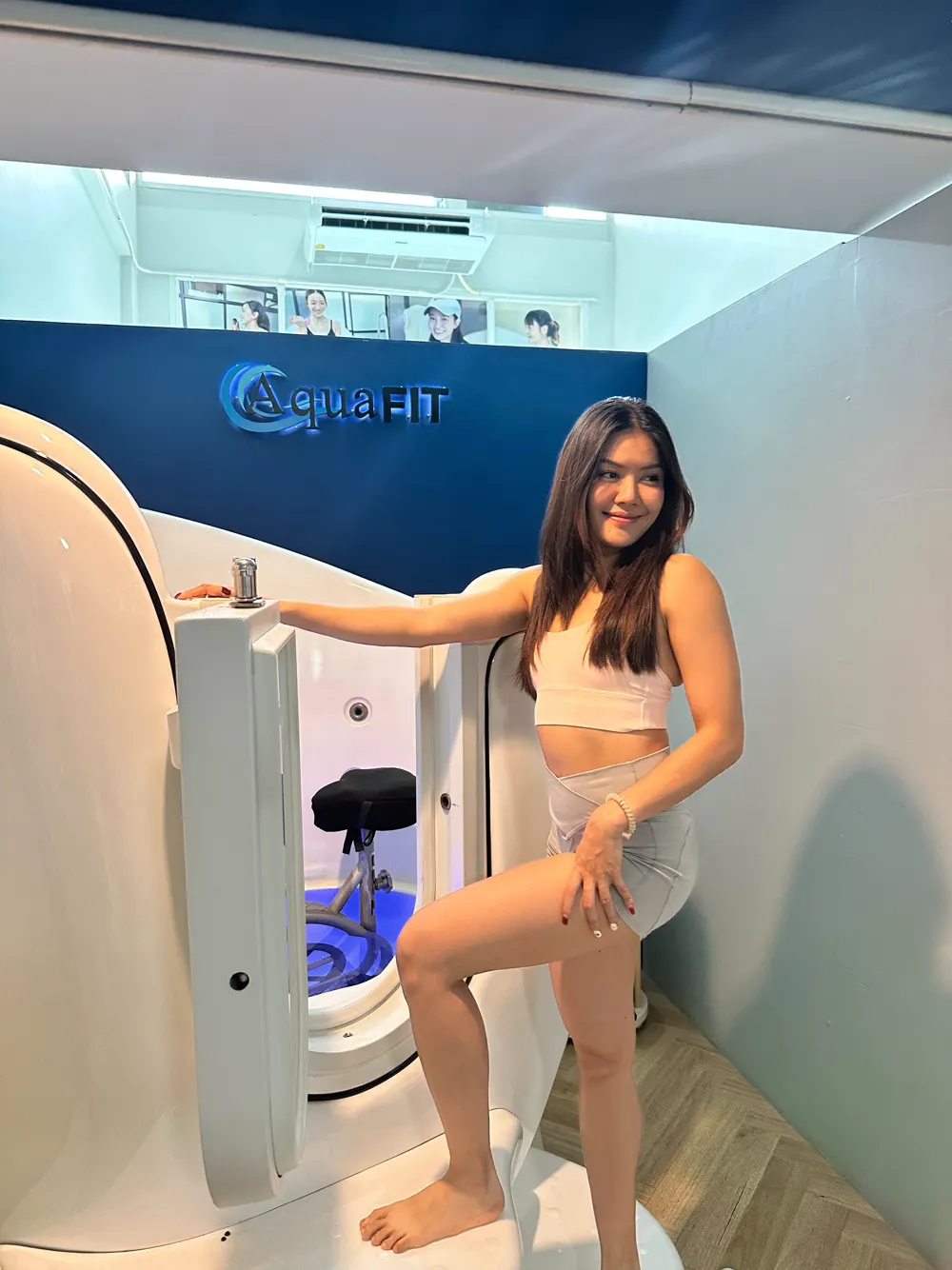
If you live in or are visiting Chiang Mai, AquaFIT Spabike Center offers private aqua cycling in a warm-water tub (around 27–40 °C). It's one person per tub, the water is drained and refilled after every customer, and a coach guides your first ride at an easy effort. See our prices and packages.
We help you get moving again, gently and at your own pace. Read more on our page for low-impact exercise for knee and back pain, or see how aqua cycling works. Over 60? See our exercise for seniors page.
Questions
Anything else? Message us on LINE – we reply in Thai or English.
Can aqua cycling make knee arthritis worse?
In the studies, no serious side effects were reported.[1][2] But any exercise can flare a sore knee if you do too much too soon. Start easy and build up slowly.
How long before I notice a difference?
The 2020 study measured results after 12 weeks of twice-weekly sessions.[1] Some people feel easier movement sooner. There's no fixed timeline.
Is aqua cycling better than a normal exercise bike for knees?
No study has compared them head-to-head for arthritis. Many people find water more comfortable. A land bike is still a good low-impact option.
Can I do aqua cycling after a knee replacement?
Possibly, once the wound has fully healed and your surgeon or physio is happy for you to exercise. The main study didn't include people with knee replacements.[1]
Is warm water better than cool water?
Many people with arthritis find warm water more comfortable for stiff joints. Warm water also adds to the effort, so drink water and take it slow.
Sources
- Rewald S. et al. (2020). Aquatic Cycling Improves Knee Pain and Physical Functioning in Patients With Knee Osteoarthritis: A Randomized Controlled Trial. Archives of Physical Medicine and Rehabilitation.
- Bartels E.M. et al. (2016). Aquatic exercise for people with osteoarthritis in the knee or hip. Cochrane.
- Osteoarthritis – Treatment and support. NHS.
- About Physical Activity and Arthritis. US Centers for Disease Control and Prevention.
- Working Out Through Pain. Arthritis Foundation.